
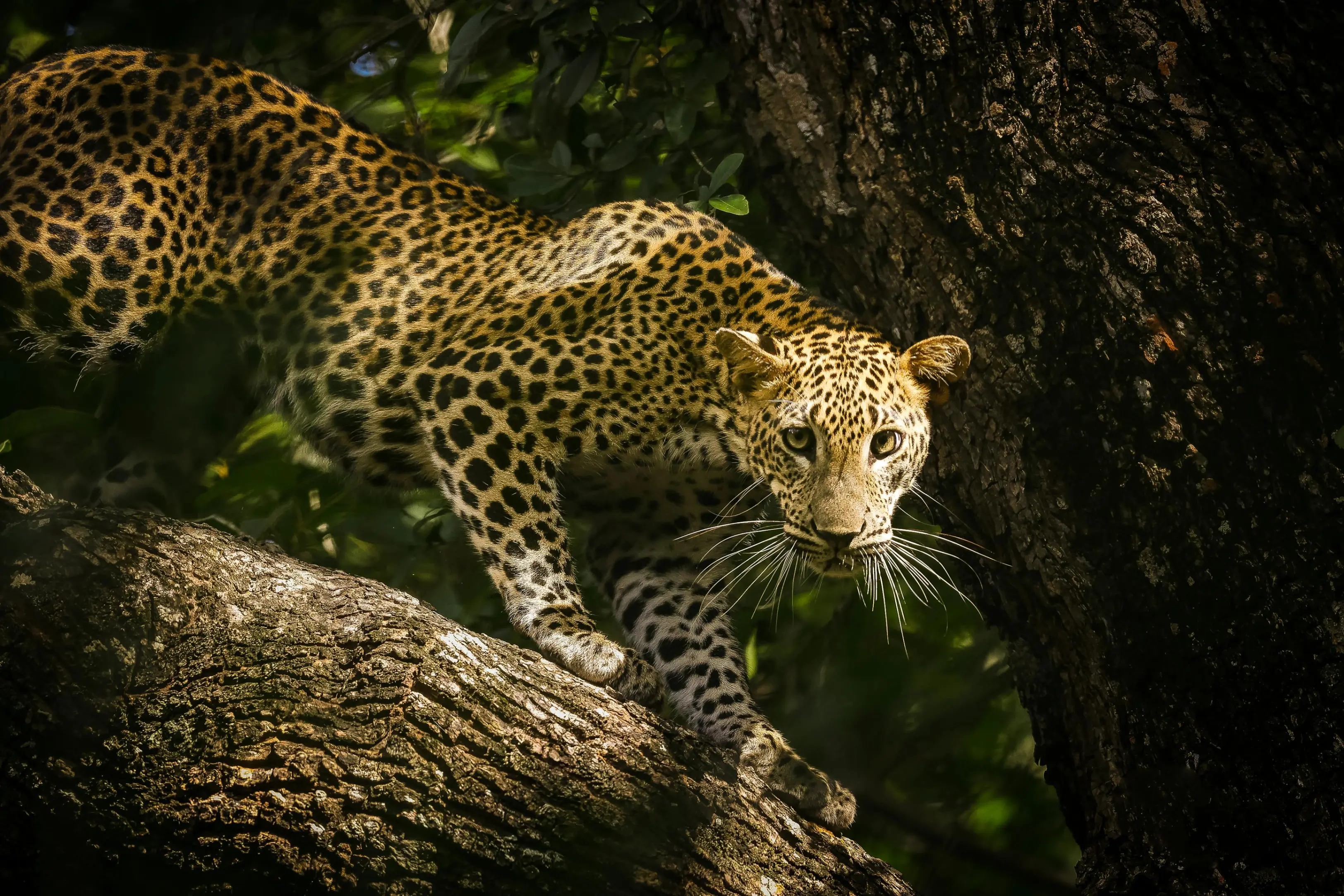
Sri Lanka is one of the finest wildlife destinations in Asia — and one of the most underrated safari destinations in the world. The island is home to the highest density of leopards in Asia, the largest wild elephant gatherings on the planet, blue whales just offshore, and an extraordinary diversity of birds, reptiles, and endemic species packed into a surprisingly small area. Here is everything you need to plan a memorable Sri Lanka safari.
Key Takeaways
- Sri Lanka has the highest density of leopards in Asia — Yala National Park offers some of the best sightings in the world
- Minneriya National Park hosts the famous Gathering — up to 300 wild elephants in one place
- The best all-round safari months are February to July
- Always book through a reputable operator with an experienced tracker — it makes an enormous difference
- A full day safari gives significantly better wildlife sightings than a half day
- Sri Lanka safaris are excellent value compared to African alternatives
- Blue whale watching off Mirissa (November–April) is world class
Why Sri Lanka for Safari?
Sri Lanka punches far above its weight as a wildlife destination. The reasons:
Leopard density. Yala National Park's Block 1 has one of the highest concentrations of leopards relative to land area anywhere in the world. On a good morning game drive sightings are almost routine rather than exceptional — something that cannot be said of most African parks.
Elephant numbers. Sri Lanka has a significant wild elephant population and several parks where large herds are reliably visible. The Minneriya Gathering — hundreds of elephants congregating around a shrinking reservoir during the dry season — is one of the great wildlife spectacles on Earth.
Compact geography. Unlike African safari destinations that require long flights between parks, Sri Lanka's major wildlife areas are all within a few hours of each other and of the main tourist circuit. You can combine a Cultural Triangle visit, hill country, beach, and safari in a single two-week trip.
Value. A full day safari in Sri Lanka costs a fraction of comparable experiences in Kenya or Tanzania while offering world-class wildlife sightings.
Sri Lanka's Best National Parks
Yala National Park — Best for Leopards
Yala is Sri Lanka's most famous national park and the one most visitors prioritise. Located in the southeast of the island, its Block 1 — the section open to tourism — covers around 140 square kilometres of dry scrub jungle, grassland, lagoons, and coastal forest.
Wildlife highlights:
- Sri Lankan leopard — the star attraction, sightings are frequent in Block 1
- Asian elephant — large herds visible near water sources
- Sloth bear — elusive but present, best chance at dawn
- Mugger crocodile — along rivers and lagoons throughout the park
- Water buffalo, spotted deer, sambar, jackal
- 200+ bird species — painted storks, sea eagles, peacocks, jungle fowl
Best time to visit Yala:
| Month | Conditions | Wildlife Viewing |
|---|---|---|
| February – April | Dry season beginning | Excellent — animals gather at water |
| May – July | Peak dry season | Best overall — highest concentration |
| August – October | Transitional | Good but park closes in September |
| November – January | Wet season | Park partially closed, reduced access |
Yala National Park closes annually around September for a period — check current closure dates before planning.
Practical information:
- Location: 300km from Colombo, 5–6 hours by road
- Nearest town: Tissamaharama (15km from park entrance)
- Safari options: Half day (3–4 hrs), full day (6–8 hrs), overnight packages
- Entry fee: USD 25–30 per person plus jeep and tracker costs
- Best approach: Stay in Tissamaharama the night before for a dawn entry
Minneriya National Park — Best for Elephants
Minneriya is home to one of the greatest wildlife spectacles in Asia — The Gathering. Between July and October, as the dry season reduces water sources across the region, hundreds of wild elephants converge on the ancient Minneriya reservoir to drink, bathe, and socialise. At peak times up to 300 elephants can be visible simultaneously — an extraordinary sight.
Wildlife highlights:
- Asian elephant — the reason to come, numbers peak July–October
- Toque macaque — endemic to Sri Lanka, found throughout the park
- Purple-faced langur — another Sri Lankan endemic
- Painted stork, lesser adjutant stork — large waterbirds at the reservoir
- Leopard — present but rarely seen
Best time to visit Minneriya:
| Month | Elephant Numbers | Notes |
|---|---|---|
| July – August | High | Gathering building up |
| September – October | Peak | Maximum elephant numbers |
| November – June | Lower | Still elephants but no mass gathering |
Practical information:
- Location: 180km from Colombo, near Habarana and Sigiriya
- Safari options: Half day (most common), full day
- Best combined with: Sigiriya (30 minutes away) — easy to do both in one day
- Entry fee: USD 15–25 per person plus jeep costs
Udawalawe National Park — Best for Consistent Elephant Sightings
If Minneriya is about the spectacle of mass elephant gatherings, Udawalawe is about the certainty of seeing elephants up close. The park's open grassland around the Udawalawe reservoir means elephants are visible on virtually every safari — often in large numbers and at close range.
Why choose Udawalawe:
- Almost guaranteed elephant sightings — more reliable than any other park
- Large herds with calves are frequently seen
- Elephant Transit Home nearby — a rehabilitation centre for orphaned elephants with public feeding sessions at fixed times
- Less crowded than Yala
- Good bird watching — over 170 species recorded
Practical information:
- Location: 165km from Colombo, between Galle and Yala
- Best combined with: Galle and the south coast, or as a stop between coast and hill country
- Entry fee: USD 15–25 per person plus jeep costs
Wilpattu National Park — Best for Solitude
Sri Lanka's largest national park by area and one of its least visited by tourists — making it the best option for those who want a genuine wilderness experience without the jeep traffic that can accumulate in Yala's Block 1.
Wildlife highlights:
- Sri Lankan leopard — present in good numbers, sightings increasing as the park recovers
- Sloth bear — Wilpattu is considered one of the best parks in Sri Lanka for sloth bear sightings
- Asian elephant, water buffalo, spotted deer
- Unique villus — natural circular water basins that attract wildlife and are unique to this park
Practical information:
- Location: 170km north of Colombo near Puttalam
- Best time: February to October
- Best combined with: Anuradhapura (1.5 hours away) for a north Sri Lanka itinerary
- Entry fee: USD 15–25 per person plus jeep costs
Bundala National Park — Best for Bird Watching
A UNESCO Biosphere Reserve on the southern coast, Bundala is Sri Lanka's premier bird watching destination — a system of lagoons and scrub forest that hosts hundreds of thousands of migratory birds between September and March.
Wildlife highlights:
- Greater flamingo — up to 2,000 present during peak migration
- Painted stork, spoonbill, pelican — large colonies at the lagoons
- 250+ bird species recorded in the park
- Olive ridley sea turtles nesting on the beach (November–January)
Best combined with: Yala (45 minutes away) — easy to visit both on the same trip.
Safari Park Comparison
| Park | Best For | Best Months | Distance from Colombo | Crowds |
|---|---|---|---|---|
| Yala | Leopards | Feb–July | 300km | High |
| Minneriya | Elephant Gathering | July–Oct | 180km | Medium |
| Udawalawe | Consistent elephants | Year-round | 165km | Medium |
| Wilpattu | Solitude, leopards | Feb–Oct | 170km | Low |
| Bundala | Bird watching | Sept–March | 240km | Low |
What to Expect on a Sri Lanka Safari
The Jeep
All safaris are conducted in open-topped 4WD jeeps — typically a Toyota Land Cruiser or similar. You sit elevated above the jeep's sides for good visibility. Most jeeps carry 4–6 passengers plus the driver and tracker.
The Tracker
A knowledgeable tracker (guide) is the difference between a memorable safari and a frustrating one. A good tracker knows the park's leopard territories, the elephants' daily movement patterns, and the best spots for each species at each time of day. Always book through an operator who provides an experienced, English-speaking tracker.
Timing
Dawn game drives (entering the park at opening, around 6am) are almost always more productive than afternoon drives. Animals are most active in the early morning, temperatures are cooler, and the light for photography is better. If you can only do one drive, do the morning.
What a Typical Full Day Safari Looks Like
| Time | Activity |
|---|---|
| 5:30am | Depart hotel |
| 6:00am | Enter park at opening |
| 6:00am – 12:00pm | Morning game drive |
| 12:00pm – 2:00pm | Lunch break outside park |
| 2:00pm – 6:00pm | Afternoon game drive |
| 6:00pm | Exit park at closing |
| 6:30pm | Return to hotel |
Photography on Safari
Sri Lanka safaris offer extraordinary photography opportunities. Key tips:
- Use a telephoto lens — 200mm minimum, 400mm+ ideal for leopard close-ups
- Shoot in RAW format for maximum flexibility
- Early morning light is best — golden hour after dawn produces the finest wildlife shots
- Continuous autofocus for moving animals
- Fast shutter speed — 1/500 sec minimum for sharp shots of moving wildlife
- No flash — disturbs animals and is generally prohibited
Choosing a Safari Operator
The quality of your safari experience depends enormously on the operator you choose. What to look for:
A knowledgeable tracker — ask specifically about the tracker's experience and language ability before booking.
A well-maintained jeep — older, poorly maintained vehicles break down and limit access to key areas.
Small group sizes — jeeps with 4 or fewer passengers give more flexibility and a better experience than fully packed vehicles.
Transparent pricing — a good operator provides a clear breakdown of park fees, jeep costs, and tracker fees rather than a vague all-in price.
Avoid:
- Operators who cannot tell you which park block you will visit
- Very cheap packages that cut corners on tracker quality or jeep condition
- Last-minute booking for peak season dates
Combining Safari with the Rest of Your Trip
Sri Lanka's wildlife parks sit conveniently along the main tourist circuit:
- Minneriya pairs naturally with Sigiriya and the Cultural Triangle
- Udawalawe fits perfectly between the south coast (Galle, Mirissa) and the hill country (Ella)
- Yala works as the finale of a south coast itinerary or as a standalone trip from Colombo
- Wilpattu suits a northern Sri Lanka itinerary combining Anuradhapura and Jaffna
For a sample itinerary that combines safari, hill country, and the Kandy Perahera see our Sri Lanka First Timers Travel Guide.
Whale Watching — Sri Lanka's Offshore Safari
No Sri Lanka wildlife guide is complete without mentioning the blue whales. The waters off Mirissa on the south coast are one of the most reliable places in the world to see blue whales — the largest animals that have ever lived on Earth.
- Best months: November to April
- Tour duration: 4–6 hours, departing early morning from Mirissa harbour
- What you might see: Blue whales, sperm whales, fin whales, spinner dolphins, flying fish
- Sighting reliability: High during peak season — most boats report sightings on the majority of trips
Combine a whale watching trip with time in Galle (45 minutes from Mirissa) for a perfect south coast experience. For the full picture on seasons, departure points and choosing a responsible operator, read our whale watching guide — and see Best Time to Visit Sri Lanka for how the wildlife calendar lines up with the rest of the year.
Ready to Plan Your Safari?
Sri Lanka's wildlife is one of the island's greatest assets and a highlight of any visit. Whether you are after leopard sightings in Yala, the elephant spectacle at Minneriya, or blue whales off Mirissa — the experiences are world class and the logistics are straightforward.
- Best Places to Visit in Sri Lanka — complete destination guide
- Sri Lanka First Timers Travel Guide — practical planning guide
- Kandy Esala Perahera 2026 Complete Guide — combine safari with the greatest festival in Sri Lanka
- Best Time to Visit Sri Lanka — when each park and season is at its best